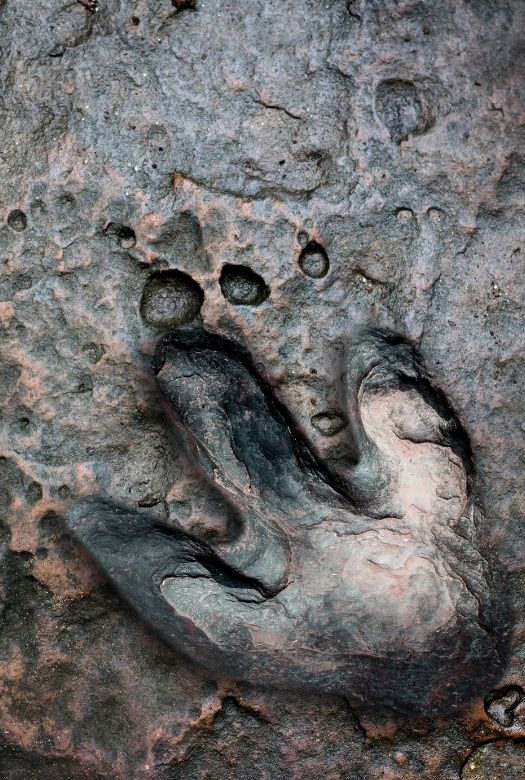
What is a dinosaur? 7 easy ways for us ludites to tell the difference between dinosaurs and other prehistoric animals
What makes a dinosaur a dinosaur? We’ve got 7 characteristics that will help you work out whether a prehistoric beast is a dinosaur or not.


“No, Mum, that’s not a dinosaur.”
Pteradactyls. Mosasaurus. Ichthiosaurus. Quetzacoatlus. Repenomamus. Dimorphodon. Volaticotherium. Plesiosaurus. Koolasuchus. Archelon. Steropodon. Deinosuchus.
Your little dinosaur fan probably knows them all.
Yet these dinosaur contemporaries are prehistoric reptiles or mammals, and not dinosaurs.
How can you recognise the difference so your little dinosaur fan is not the only expert?
Fortunately, there are 7 easy ways to tell the difference between dinosaurs and other prehistoric animals.
Disclosure: Some of the links below are affiliate links. We may earn a small commission if you use these links to make a purchase. Thank you! Please read our full disclosure for more information.

Apply these elements cumulatively
As the following rules demonstrate, prehistoric reptiles and mammals share some characteristics with dinosaurs. Egg-laying is a good example of this.
To properly distinguish between dinosaurs and their prehistoric peers, these seven characteristics should be considered cumulatively (to the extent possible).
1. Dinosaurs only lived during the Mesozoic Era
Dinosaurs lived during the Mesozoic Era, which is why we often call it “The Age of Dinosaurs”. Dinosaurs only lived during the Mesozoic Era, not before or after.
The Mesozoic Era lasted around 160 million years and spanned from about 252 to 66 MYA. It is split into three periods:
- Triassic Period (252-201 MYA): The first dinosaurs appeared during this period, but they were not yet the dominant land animals. Dinosaurs that lived during this period included Herrerasaurus, Coelophysis, Eoraptor and Plateosaurus.
- Jurassic Period (201 to 145 MYA): Dinosaurs became the dominant terrestrial vertebrates. Dinosaurs that lived during this period include Stegosaurus, Brachiosaurus, Diplodocus, Apatosaurus, Allosaurus, and Archaeopteryx.
- Cretaceous Period (145-66 MYA): This period saw incredible dinosaur diversity before the asteroid impact ended the era of non-avian dinosaurs. Some impressive dinosaurs from this period include Tyrannosaurus rex, Triceratops, Ankylosaurus, Velociraptor, Pachycephalosaurus, Parasaurolophus, Spinosaurus, Argentinosaurus, Carnotaurus, Deinocheirus, Iguanodon, and Therizinosaurus.
(For more about some of these dinosaurs, try Dinosaur 101 and Dinosaur 102).
This means that other animals, such as Dimetrodon, Lycaenops and Lystrosaurus, which lived during the Permian Era (BEFORE dinosaurs, 299 to 252 MYA), are not dinosaurs – even if they are a “saurus”.
Likewise, Gastornis, the Woolly Mammoth, Megatherium, and even prehistoric humans, lived during the Cenozoic Era (Paleogene Period, Neogene Period and Quaternary Period – 66 MYA to the present): AFTER the Age of Dinosaurs.

Some animals lived during the Age of Dinosaurs and the preceding or following periods. These are also not dinosaurs.
Animals that survived the mass extinction event at the end of the Permian Era include Lystrosaurus, Temnospondyls, Cynodonts, Ammonites and some fish. They lived in the Permian Era and at least the Triassic period.
Some reptiles (crocodiles, turtles, snakes and lizards), mammals, amphibians, fish, insects, molluscs and avian dinosaurs AKA birds survived the Cretaceous-Paleogene mass extinction.
These animals are also not dinosaurs as they did not ONLY live during one of the periods of the Mesozoic Era.
It’s hard to remember when all of these animals lived. Fortunately, most museums have signs indicating when the animal lived (and whether it’s a dinosaur or not). Dinosaur parks are frequently displayed in chronological order, which makes things easier.
The following differences between dinosaurs and other prehistoric reptiles also help!
Get our free dinosaur printables
When you join our newsletter
2. Dinosaurs had skin like reptiles
Dinosaurs had skin similar to reptiles, including prehistoric reptiles. They did not have fur.
This is an easy way to distinguish between dinosaurs and prehistoric mammals, whether they lived during the Mesozoic or, like the woolly mammoth or the sabre-toothed tiger, during the Ice Age. Many museums display these prehistoric animals together
Some dinosaurs, like Archaeopteryx and Yutyrannus, had feathers. Feathers are still not fur.
Prehistoric mammals
Repenomamus:
Repenomamus was one of the largest mammals to walk the Earth during the Cretaceous period. At learly 1 metre long and weighing around 14kg, this badger-like mammal was carnivorous and lived in what is now China. It even fed on small dinosaurs – one was found with the remains of a Psittacosaurus in its stomach.
Volaticotherium:
While most mammals lived on land, this small Jurassic mammal preferred the treetops of what is now China. Volaticotherium had flaps of skin between its limbs which allowed it to glide from tree to tree. Its jaw suggests it had a diet of insects.
Didelphodon:
This burrowing mammal lived in what is now North America during the Late Cretaceous. It looked like a cross between a Tasmanian devil and an otter. Like the Tasmanian devils, it had one of the highest proportional bite forces of any known mammal, living or dead, it was probably a scavenger and fed on the carcases of dinosaurs and other mammals.

3. Dinosaurs laid eggs
Like prehistoric reptiles and birds, dinosaurs laid eggs. This is a clear distinction from most prehistoric mammals.
However, some mammals, both prehistoric and current, do lay eggs like dinosaurs, birds and reptiles. They have a cloaca (single opening for digestive, urinary and reproductive tracts), but suckle their young through milk glands on the female’s stomach, rather than teats. These special mammals are known as monotremes.
The platypus (lives in Australia) and five types of echidna (2 live in Australia, 3 in New Guinea) are the only known living monotremes. But some monotremes walked the Earth with dinosaurs.
Prehistoric monotremes lived during the Jurassic and Cretaceous periods in what is now Madagascar, South America and Australia. They may also have been present in Antarctica, although no remains have been found there yet.
Prehistoric monotremes
Steropodon
One of the earliest known monotremes (and one of the earliest known Australian mammals) is Steropodon. It lived around 105 MYA during the Early Cretaceous, grew to around 50cm long and may have shorter, stumpier and toothier resembled a platypus.
Patagorhynchus
Patagorhynchus is a monotreme that lived in what is now southern Argentina during the Late Cretaceous (70 MYA), when Argentina was part of Gondwana. Like a platypus, it had a duck bill, teeth, and probably liked to swim.
Opalios
This early prehistoric monotreme was probably similar tot he platypus but with the jaw and snout more like an echidna, giving it the nickname echidnapus. It might be one of the only examples of an animal that evolved from a land-dweller to a more aquatic animal.

4. Dinosaurs lived on land
The term “dinosaur” is synonymous with massive, ancient reptiles. However, it only applies to certain reptiles that lived on land.
Plesiosaurus, Ichthyosaurus and Mosasaurus, such as the huge Mosasaurus in Jurassic World, were prehistoric aquatic reptiles, not dinosaurs. They spent their lives in water.
Some dinosaurs, like Spinosaurus, were semi-aquatic. They lived near the shores of lakes, rivers, and oceans and sometimes went for a swim, as evidenced by fossilised swim tracks which formed when the toes of a floating dinosaur touched the bottom while swimming. Even Spinosaurus did not live underwater. No dinosaurs lived underwater.
Even the semi-aquatic ancestors of today’s crocodiles and turtles were not true dinosaurs.
Just because dinosaurs lived on land does not mean they did not interact with prehistoric marine reptiles. They ate fish and other aquatic animals (some dinosaur teeth and coprolites evidence a diet of fish and molluscs). Likewise, larger prehistoric marine reptiles probably feasted on dinosaurs if the opportunity arose. Some dinosaur fossils have been found with tooth marks from prehistoric crocodiles on them.
Some dinosaur fossils have been found in seafloor sediments miles from the coast. Does that not show that some dinosaurs were aquatic?
No. The fossils were not found there because the dinosaur lived and died in the sea. Instead, these animals died next to the ocean. As the body decayed, it became bloated and buoyant and was taken out to sea by the tides and currents. Eventually, when the decomposition gases were released, the dinosaur sank to the sea floor. When the sea floor became cliffs millions of years later, the dinosaur was found. Borealopelta markmitchelli is a remarkable mummified dinosaur fossil that was preserved in exactly this manner.
Prehistoric marine reptiles
Mosasaurus
Mosasaurus, the lizard of the Meuse River, was one of the first Mesozoic marine reptiles known to science (the first fossils were found in a chalk quarry in Maastricht, the Netherlands, in around 1780). It lived from 82 to 66 MYA and inhabited much of the Atlantic Ocean and adjacent seaways, including tropical, subtropical, temperate and subpolar waters. This apex predator measured up to 12 metres long and had powerful jaws with dozens of large teeth and limbs shaped like paddles to steer the animal underwater.
Plesiosaurus:
In 1823, Mary Anning discovered the first fossils of Plesiosaurus in Dorset, England. This large, early Jurassic, marine reptile had a small head, long neck, broad, turtle-like body, short tail and two pairs of large, elongated paddles for legs.
Archelon:
This extinct marine turtle from the Late Cretaceous is the largest turtle to ever be found. It measured 4.6 metres from head to tail and weighed 2.2 to 3.2 tonnes. It had a leathery shell, rather than the hard shell that most sea turtles have, and a hooked beak for crushing crustaceans and molluscs.
Ichthyosaurus:
This fish lizard has been found in various places in Europe (Belgium, England, Germany, Portugal, Switzerland) and was the first complete fossil discovered by Mary Anning. Measuring up to 3.3 metres in length, and lived during the Jurassic period and resembled a dolphin. Many of the fossils found are complete and some even had baby specimens inside them. This indicates that Ichthyosaurus may have given birth to live young.
Temnospondyli:
Temnospondyli is a giant tetrapod, a prehistoric amphibian that florished during the Carboniferous, Permian and Triassic periods, with a few fossils also found from the Jurassic and Early Cretaceous periods. Fossils have been found on every continent. Most were semi-aquatic, though some fully adapted to life on land and only returned to the water to breed. When viewed from above, the skulls were triangular in shape and while some Temnospondyli were small and resembled salamanders, others were large and looked like crocodiles. Unlike many modern amphibians, many prehistoric Temnospondyli also had scales and armour-like bony plates.

5. Only some feathered dinosaurs could fly
Only dinosaurs with feathers could fly. If it flew and did not have feathers, it was not a dinosaur.
When we think of prehistoric flyers, we think of Quetzacoatlus or Pterodactyl. These impressive flyers were Pterosaurs, a group of prehistoric flying reptiles. They did not have wing feathers. They are not dinosaurs.
Palaeontologists have found evidence of feathers on various dinosaur fossils, from Archaeopteryx (where palaeontologists discovered the feather before the dinosaur) and Microraptor, to various Dromaeosaurs like Velociraptor, and Yutyrannus, a close relative of T.rex. If Yutyrannus is any indication, T.rex may have had feathers.
But feathers alone do not mean that a dinosaur could fly.
During the Jurassic period, some dinosaurs developed asymmetrical, pennaceous wing feathers. This gave them the ability to glide and, later, propel themselves upwards and forwards and “fly”.
The Curious case of
Yi qi and Ambopteryx
Yi qi and Ambopteryx both lived in what is now China during the Jurassic period. These small dinosaurs had feathers coating their bodies (which were fossilised), and long tail feathers.
Rather than wing feathers like modern birds, Yi qi and Ambopteryx had thin membranes stretched between their fingers and their bodies, similar to modern-day bats.
Both dinosaurs were probably gliders and were unlikely to have been capable of flapping flight.
Yi and Ambopteryx represent an alternative or “experimental” evolutionary path for airborne dinosaurs. Their wings did not take off (figuratively) – no Cretaceous dinosaurs have been found with bat wings, although both birds and pterosaurs were prolific.
Prehistoric flying reptiles
Pterodactylus
Pterodactylus was the first pterosaur palaeontologists discovered, and it was discovered in the Jurassic limestone of the Altmühl Valley. It was relatively small with a long, toothed beak for feasting on fish and winged fingers supporting wing membranes that enabled it to fly.
Quetzalcoatlus
Quetzalcoatlus was possibly the largest pterosaur that ever lived. It was as tall as a giraffe when standing and had a wingspan to rival an F16 fighter jet. With hollow wing bones and powerful flight muschles, it was a formidable flyer, but could also stalk prey on the ground.
Dimorphodon
Until 1828, pterosaur fossils had only been found in Germany. Then Mary Anning discovered this Jurassic pterosaur. It was stockier than its German cousings with shorter wings, strong hind limbs, a longer tail and a larger head. It had two distinct types of teeth and a robust skull and probably ate insects and fish. You can find the original fossil at the Natural History Museum in London.
Rhamphorhynchus
Palaeontologists have found fossils of the Jurassic Pterosaur Rhamphorhynchus or “beak snout” in England, Spain, Portugal Tendaguru in Tansania, the Altmühl Valley in Germany, and more recently in Chile. It is the Pterosaur most commonly found in the Altmühl Valley; some of the fossils found there even preserved the impressions of soft tissues, including wing membranes. It had needle-like teeth and a curved beak (without teeth) to feed on fish and a long tail with a diamond-shaped tip.
Pteranodon
Pteranodon was a prehistoric flying reptile from the late Cretaceous that lacked teeth and had a prominent cranial crest. They had large wingspans with strong, hollow bones and powerful flight muscles to help it glide long distances over oceans. Pteranodon skulls were suited for an aquatic lifestyle, streamlined for diving and capturing fish.

6. Dinosaurs walked with their legs under their body
Have you ever looked at how a crocodile or alligator walks?
They walk with their legs out to the side of their torso.
This little video of a gator in suburban Florida shows what I mean clearly:
This gait is typical of prehistoric reptiles, including prehistoric crocodilians, such as Deinosuchus, Sarcosuchus and Kaprosuchus.
Dinosaurs were different.
Dinosaurs were more like us – and birds.
Whether they had bird or lizard hips, dinosaurs walked in an upright stance with their legs directly beneath them, perpendicular to their body. They did not walk with their legs splayed out to the sides like lizards.
This stance allowed for upright posture, efficient movement and supported large bodies.
Bipedal dinosaurs like T.rex used powerful tail muscles to swing their legs forward. Larger, quadrupedal dinosaurs (like Diplodocus or Ankylosaurus) ambled. They used a more complex, diagonal gait, keeping one foot down on each side, similar to how beavers walk today.
Where they can (and the fossils aren’t flat in situ due to fragility), museums will show dinosaurs with their legs under them, rather than splayed to the side.

Bird hips and lizard hips?
Dinosaur hips are categorised as either “lizard-hipped” or “bird-hipped”.
Bird-hipped dinosaurs
Bird-hipped dinosaurs or Ornithischia had backward-pointing pubic bones, similar to birds. Ornithischians are mostly herbivorous: their backward-pointing hip probably accommodated the larger guts that herbivores needed to digest their food.
Early, smaller Ornithischians were bipedal (walked on two legs), such as Lesothosaurus and Hypsilophodon. They used their hind legs for running and forelimbs for grasping food.
Many later groups of Ornithischians evolved to become quadrupedal and support greater body mass, including:
- Armoured dinosaurs like Stegosaurus and Ankylosaurus
- Ceratopsians like Triceratops, whose large heads shifted their centre of mass forward, and
- Hadrosaurs (duck-billed dinosaurs) like Iguanodon or Edmontosaurus (though juvenile members may have still been bipedal).
Interestingly, while all bird-hipped dinosaurs were herbivorous, some early Ornithischians may have been omnivores. Analyses of the teeth of some Ceratopsians also suggest that Triceratops and its relatives may have been opportunistic omnivorous grazers.
Lizard-hipped dinosaurs
Lizard-hipped dinosaurs or Saurischians had a pubis bone that points forward and down, like lizard hips.
Well-known Saurichians include:
- Sauropods, which have a long neck, like Diplodocus, Brachiosarus and Apatosaurus, as well as the largest animals ever to walk the planet, the Titanosaurs, including Argentinosaurus and Dreadnaughtus.
- Bipedal carnivores known as Theropods, including T.rex, Allosaurus, Velociraptor, Spinosaurus and Dilophosaurus
- Early forms of Herrarasaurus from the Triassic period, including Eoraptor.
Despite the name, birds evolved from the lizard-hipped dinosaurs (theropods). According to a study carried out by researchers from Yale University, when birds are still embryos, their hips resemble the pelvis of a T.rex. Birds are more closely related to Velociraptor than to bird-hipped Stegosaurus, despite the confusion over their hip structure.

7. Dinosaurs had holes in their hips
This difference between dinosaurs and other prehistoric animals is only clear from the skeleton. This might be difficult when your little dinosaur expert is playing in the lounge, but not when you are visiting a museum.
We have museum suggestions for you!
Have you ever had a good look at a dinosaur’s hips?
Dinosaurs had a perforate acetabulum. This is an opening or hole in the centre of the pelvis (the three connected bones commonly known as the hipbone) where the head of the femur (thigh bone) sits. Other reptiles did not (and do not) have this hole in their hips; they only had (and have) a depression.
It is often difficult to see this difference between dinosaurs and other prehistoric animals because the thigh bone is in the way when the skeleton is mounted.
This hole makes it easier for dinosaurs to walk in an erect stance with their hindlimbs located directly beneath them.
Of all tetrapods (vertebrate animals with four limbs or descendants of ancestors with four limbs), dinosaurs were the only ones to have a perforate acetabulum.
And all dinosaurs had them, making the perforate acetabulum a defining characteristic of dinosaurs.
Well, almost all dinosaurs. But there are some exceptions, probably due to differing evolutionary stages.
Today’s birds share this feature with their non-flying dinosaur relatives.
They also share another skeletal feature with T.rex that Pterosaurs did not have: a wishbone. Turkey anyone?
What about Ankylosaurus?
Generally, all dinosaurs had a perforate acetabulum – a hole in their hips. But there were some exceptions.
Saturnalia and Guaibasaurus
Some early dinosaurs had only partially open or closed hip sockets, indicating that this trait was not fully developed at the start of dinosaur evolution. These include Saturnalia and Guaibasaurus, some of the earliest known dinosaurs that lived during the Late Triassic (231 MYA and 225 MYA respectively). Both of these early sauropodomorphs were found in Brazil. Saturnalia was a small, bipedal sauropodomorph that was around 1.5 metres long and weighed up to 11 kg with a rather long neck and small head. Guaibasaurus was very similar, but around 3 metres long and weighing around 35 kg. Both have a mixture of sauropodomorph and theropod characteristics, making it difficult to classify them.
Ankylosaurs
The most prominent exceptions are the Ankylosaurs, armoured dinosaurs like Ankylosaurus, Edmontonia, Gastonia and Borealopelta, lost or closed their perforate acetabulum.
Scansoriopteryx and Archaeopteryx
These early feathered theropods sometimes show only partially open hip sockets.

BONUS: A less-visible difference between dinosaurs and other prehistoric animals
Palaeontologists currently theorise that most, if not all, dinosaurs were endothermic, or warm-blooded!
This is another trait that separates dinosaurs from their ancestors and most other reptiles, which remained cold-blooded.
This trait also aided their much more active lifestyles.
Unfortunately, you can’t easily use this characteristic to tell the difference between dinosaurs and other prehistoric animals.
7 ways to tell the difference between dinosaurs and other prehistoric animals
- Dinosaurs only lived during the Mesozoic Era
- Dinosaurs had skin like reptiles (and sometimes feathers)
- Dinosaurs laid eggs
- Dinosaurs lived on land
- Only some feathered dinosaurs could fly
- Dinosaurs walked with their legs perpendicular to (under) their body
- Dinosaurs had holes in their hips
- (Dinosaurs were warm-blooded)
Use these 7 characteristics to tell the difference between dinosaurs and other prehistoric animals
You might not know the name of the beast before you. Most likely, it ends in saurus. But is it a dinosaur?
These 7 characteristics highlight the distinction between dinosaurs and other prehistoric beasts. You can use them to work out whether the creature before you is a dinosaur, or not – and why. And with this newfound knowledge, you won’t be upstaged by your little dinosaur fan.
Save for later